The Complete Property Snagging Guide (2026 Edition) | PropertySnagging.ae
- Jul 8
- 8 min read
Buying a new property is one of the biggest financial decisions most people will ever make. Whether you're purchasing your first apartment, investing in an off-plan project, or taking handover of a luxury villa, the final stage before accepting the keys deserves far more attention than many buyers realise.
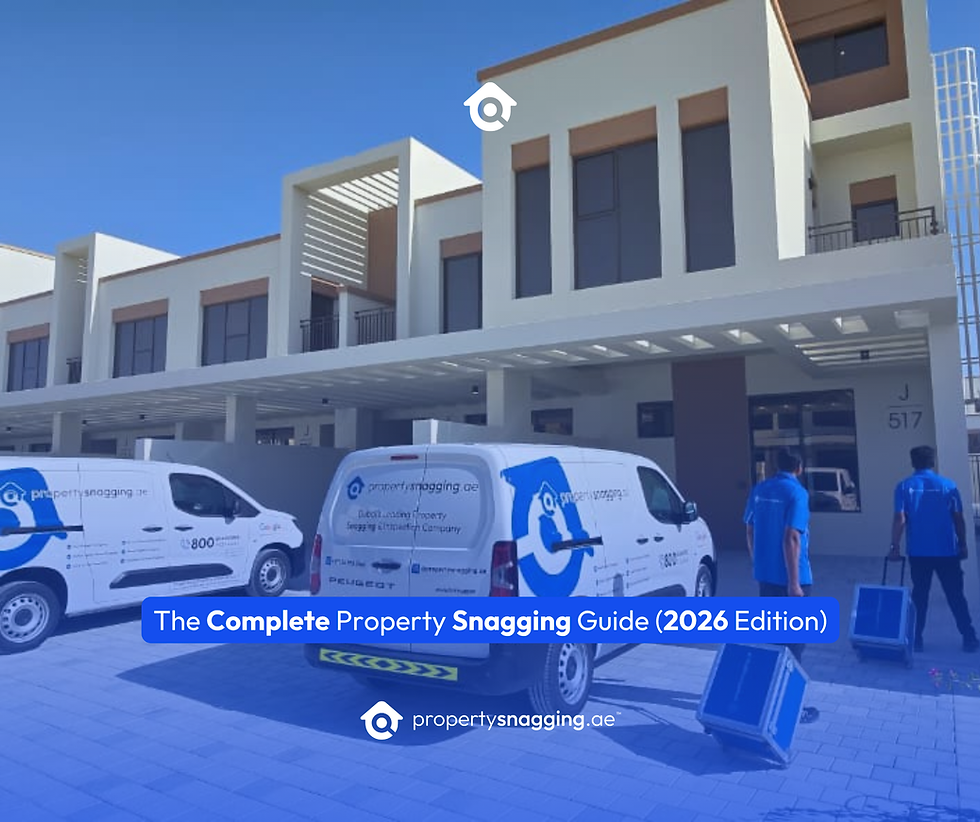
This Property Snagging Guide explains everything you need to know about professional snagging inspections in 2026. From understanding common construction defects to knowing when to schedule an inspection, this guide is designed to help buyers protect their investment and avoid costly surprises after moving in.
Over the past few years, Dubai's property market has experienced exceptional growth. Thousands of new homes are handed over every month by leading developers. While construction standards continue to improve, no project leaves the site completely free from defects. Even premium developments can contain issues that are not immediately visible during a standard walkthrough.
A professional snagging inspection provides an independent assessment of your property's condition, giving you documented evidence that can be presented to the developer before defects become your responsibility.
Key Takeaways
✅ Property snagging identifies defects before you accept your property.
✅ Every new property should undergo an independent inspection, regardless of the developer.
✅ Hidden defects often include waterproofing issues, electrical faults, HVAC problems, plumbing leaks, and poor finishing.
✅ A professional snagging report helps developers rectify defects during the handover process.
✅ Early inspections can save thousands of dirhams in future repair costs.
✅ Professional inspections use specialist equipment that identifies problems invisible to the naked eye.
✅ Well-documented reports improve communication with developers and reduce disputes.
Why Property Snagging Matters More Than Ever in 2026
Dubai continues to attract investors from around the world. Major communities are expanding rapidly, and developers are delivering thousands of new homes each year.
As construction volume increases, maintaining consistent quality across every unit becomes increasingly challenging. Even projects built by highly respected developers can contain defects caused by:
Tight construction schedules
Multiple subcontractors working simultaneously
Material variations
Installation errors
Last-minute finishing work
Weather exposure during construction
These aren't necessarily signs of poor construction. They are often the result of the complexity involved in delivering large-scale residential developments.
What matters is identifying these issues before responsibility transfers from the developer to the homeowner.
This is where professional property snagging becomes invaluable.
What Is a Property Snagging Inspection?
A property snagging inspection is a comprehensive technical assessment carried out before or shortly after handover to identify defects, incomplete work, and quality issues.
Unlike a casual walkthrough, a professional inspection follows a structured methodology that evaluates hundreds of individual checkpoints throughout the property.
Inspectors assess every accessible area, including:
🏠 Walls and ceilings
🚪 Doors and windows
💧 Plumbing systems
⚡ Electrical installations
❄️ Air conditioning performance
🪟 Glass and glazing
🚿 Bathrooms
🍽️ Kitchens
🧱 Flooring and tiling
🌧️ Waterproofing
🏡 Balconies and terraces
🚘 Parking areas
📦 Storage spaces
Every observation is recorded with photographs, descriptions, severity ratings, and recommendations for corrective action.
Rather than relying on memory or handwritten notes, buyers receive a professionally prepared report that clearly documents each defect for the developer's rectification team.
What Makes Professional Snagging Different?
One of the biggest misconceptions is that buyers can perform the inspection themselves.
While anyone can identify obvious cosmetic defects, many construction issues require technical knowledge, specialised equipment, and years of inspection experience.
Professional inspectors commonly use:
Moisture meters
Thermal imaging cameras
Laser measurement tools
Socket polarity testers
Electrical testing devices
Water pressure testing equipment
Digital levels
Lux meters for lighting performance
These tools help detect problems that cannot be seen during a normal viewing.
For example, a thermal camera may reveal missing insulation behind a wall or detect abnormal temperature differences caused by concealed water leaks.
Similarly, a moisture meter can identify hidden dampness long before staining appears on finished surfaces.
These findings often prevent expensive repairs months after moving in.
What Does a Professional Snagging Report Include?
A high-quality snagging report is much more than a checklist.
It serves as a detailed technical document that records the property's overall condition at the time of inspection.
A comprehensive report typically includes:
Photographic Evidence
Every defect is supported by high-resolution photographs, making it easier for developers and contractors to identify the exact issue.
Exact Location
Each observation specifies the room, wall, ceiling, fixture, or installation where the defect was identified.
Technical Description
Instead of vague comments like "paint issue," professional reports describe the actual construction concern, allowing contractors to apply the correct repair method.
Severity Assessment
Defects are generally prioritised based on their potential impact.
For example:
Safety hazards
Functional defects
Water ingress risks
Mechanical failures
Cosmetic imperfections
This prioritisation helps developers address critical issues first.
✔ Recommended Rectification
Where appropriate, inspectors recommend suitable corrective actions based on recognised construction practices.
Common Defects Found During Property Snagging Inspections
After thousands of inspections across Dubai, certain categories of defects appear consistently, regardless of the property's size or price.
Some of the most common include:
Interior Finishes
Uneven paint
Surface scratches
Hollow floor tiles
Cracked grout
Damaged skirting
Ceiling imperfections
Doors and Windows
Misaligned doors
Loose handles
Faulty locks
Window sealing gaps
Damaged glazing
Poor silicone application
Plumbing
Slow drainage
Water leaks
Loose sanitary fittings
Low water pressure
Poor waterproofing around wet areas
Electrical
Incorrect socket wiring
Loose faceplates
Non-functioning switches
Lighting inconsistencies
Missing circuit labels
HVAC Systems
Air conditioning remains one of the most critical systems in UAE properties.
Inspectors frequently identify:
Uneven cooling
Airflow restrictions
Condensation issues
Incorrect vent balancing
Excessive operational noise
Expert Insight: Small Defects Often Become Expensive Problems
One of the most overlooked aspects of property snagging is understanding how seemingly minor issues can escalate over time.
A small silicone gap around a shower enclosure may appear insignificant during handover. Yet if left untreated, water can seep behind tiled surfaces, leading to hidden moisture damage, mould growth, and deterioration of surrounding finishes.
Likewise, a slightly uneven floor tile may not seem urgent, but repeated foot traffic can loosen the tile further, eventually requiring more extensive repairs.
Professional inspectors assess defects not only based on how they appear today, but also on the potential long-term impact if they remain unresolved.
This preventive approach is one of the main reasons experienced property owners continue to invest in independent snagging inspections before accepting handover.
When Should You Book a Property Snagging Inspection?
Timing plays a significant role in the effectiveness of a snagging inspection. Booking too early may mean the property is still under construction, while waiting too long could leave you responsible for defects that should have been rectified by the developer.
The ideal times include:
Before Handover
This is the preferred stage. An independent inspection before accepting the keys allows the developer to rectify defects before ownership is fully transferred.
Immediately After Handover
If pre-handover access is unavailable, arrange an inspection as soon as you receive the keys. Many developers provide a period during which reported defects will be corrected.
Before the Defect Liability Period Ends
If you've been living in the property for several months, a final inspection before the Defect Liability Period (DLP) expires can identify issues that have only become visible over time, such as settlement cracks, plumbing leaks, or HVAC performance problems.
The Property Snagging Process: Step by Step
Understanding what happens during a professional inspection helps buyers know what to expect.
1️⃣ Booking the Inspection
Provide your property details, handover date, and access arrangements. An experienced snagging company will recommend the best inspection timing.
2️⃣ On-Site Inspection
Inspectors carry out a room-by-room assessment, testing accessible systems and documenting defects with specialist equipment.
3️⃣ Report Preparation
Every observation is organised into a detailed report with photographs, technical descriptions, locations, and recommended corrective actions.
4️⃣ Developer Rectification
The report is submitted to the developer or contractor so identified defects can be rectified.
5️⃣ Re-Inspection (If Required)
For larger defect lists, a follow-up inspection verifies that repairs have been completed to an acceptable standard.
How Much Does Property Snagging Cost?
The cost of a professional snagging inspection depends on several factors, including:
📏 Property size
🏢 Apartment or villa
🛏️ Number of bedrooms
🏗️ Property complexity
📍 Location
🔍 Scope of inspection
While some buyers view snagging as an additional expense, it is often one of the highest-value investments made during the purchase process.
Repairing concealed water damage, electrical faults, poor waterproofing, or defective HVAC installations after the developer's responsibility ends can cost many times more than the inspection itself.
Rather than focusing only on inspection cost, consider the potential savings from identifying defects before they become your financial responsibility.
Risks of Skipping a Professional Snagging Inspection
Some buyers assume a newly built property should be free from defects. In practice, every project has a unique set of construction challenges.
Skipping an inspection can result in:
❌ Hidden leaks causing structural damage
❌ Inefficient air conditioning leading to higher energy bills
❌ Electrical safety concerns
❌ Waterproofing failures in bathrooms and balconies
❌ Expensive repairs after the DLP expires
❌ Reduced resale value due to unresolved defects
❌ Delays in tenant move-in caused by unexpected repairs
Many of these issues are difficult to identify during a standard handover walkthrough but become apparent during a structured professional inspection.
Expert Observations from Thousands of Inspections
After completing thousands of property inspections across Dubai, one pattern remains consistent: no two properties are identical.
Even neighbouring apartments completed by the same contractor can have very different defect profiles. One unit may require only minor cosmetic corrections, while another may contain plumbing leaks, incorrectly installed fixtures, or HVAC balancing issues.
Another important observation is that the most expensive defects are rarely the most visible. Buyers often notice paint touch-ups or chipped tiles but overlook hidden moisture, incorrect drainage falls, loose electrical connections, or inadequate waterproofing.
This is why professional inspectors follow a systematic inspection methodology instead of relying on a visual walkthrough alone.
If you're interested in real inspection findings, explore our related resources:
The Dubai Property Defect Index 2026 – https://www.propertysnagging.ae/post/the-dubai-property-defect-index-2026-ranking-construction-quality-across-major-developments
The Hidden Cost of Property Defects in Dubai – https://www.propertysnagging.ae/post/the-hidden-cost-of-property-defects-in-dubai-2026-inspection-data-reveals-the-truth
What We Found in 1,000 Property Inspections Across Dubai – https://www.propertysnagging.ae/post/what-we-found-in-1-000-property-inspections-across-dubai-1
PropertySnagging.ae Blog – https://www.propertysnagging.ae/property-snagging-dubai-blog
These articles provide additional data, inspection trends, and expert insights based on real projects across Dubai.
Industry Standards and Trusted Resources
Professional snagging inspections should be guided by recognised construction practices and local regulations where applicable.
Useful references include:
Dubai Land Department (DLD)
Real Estate Regulatory Agency (RERA)
Dubai Municipality Building Regulations
InterNACHI Standards of Practice
International Building Code (IBC)
While individual developments may have their own specifications, independent inspections provide buyers with an objective assessment focused on workmanship, functionality, and quality.
Frequently Asked Questions
1. What is property snagging?
Property snagging is a detailed inspection of a newly built property to identify construction defects, unfinished work, installation issues, and quality concerns before or shortly after handover.
2. Is property snagging necessary for luxury properties?
Yes. Premium finishes and higher-value installations increase the importance of quality control. Luxury properties can contain defects just as standard homes do, and repairs are often more expensive.
3. How long does a snagging inspection take?
Inspection duration depends on the property's size and complexity. Smaller apartments may take a few hours, while large villas typically require significantly longer to complete thoroughly.
4. Can I perform the inspection myself?
You can identify obvious cosmetic issues, but professional inspectors use specialist equipment and technical expertise to detect hidden defects that most buyers would not recognise.
5. Does the developer have to fix all defects?
Developers generally rectify defects that fall within their contractual and warranty obligations. A professional snagging report provides clear documentation that supports the rectification process.
6. What happens after I receive the report?
The report is submitted to the developer or contractor for review. Once rectification work is complete, many buyers arrange a re-inspection to confirm that repairs have been carried out to an acceptable standard.
Final Thoughts
A professional Property Snagging Guide is about more than identifying scratches or cosmetic imperfections. It is about protecting one of your most valuable investments through a structured, independent assessment of quality, safety, and workmanship.
Whether you're buying your first apartment, investing in an off-plan development, or taking handover of a luxury villa, a comprehensive snagging inspection helps ensure that defects are identified and documented before they become costly problems.
As Dubai's property market continues to grow in 2026, buyers who prioritise independent inspections are better positioned to safeguard their investment, minimise future repair costs, and enjoy greater confidence in the quality of their new home.
Ready to Protect Your Investment?
Don't leave your property handover to chance. A professional snagging inspection gives you the confidence that your new home has been independently assessed by experienced inspectors using specialist equipment and a proven inspection methodology.
At PropertySnagging.ae, we deliver comprehensive, photo-rich reports, clear defect documentation, and practical recommendations to help you address issues before they become expensive repairs.
Book your inspection today and let our experienced team help you take possession of your property with complete peace of mind.
📞 +971 56 790 7966
⭐ 1014+ Verified 5-Star Reviews


