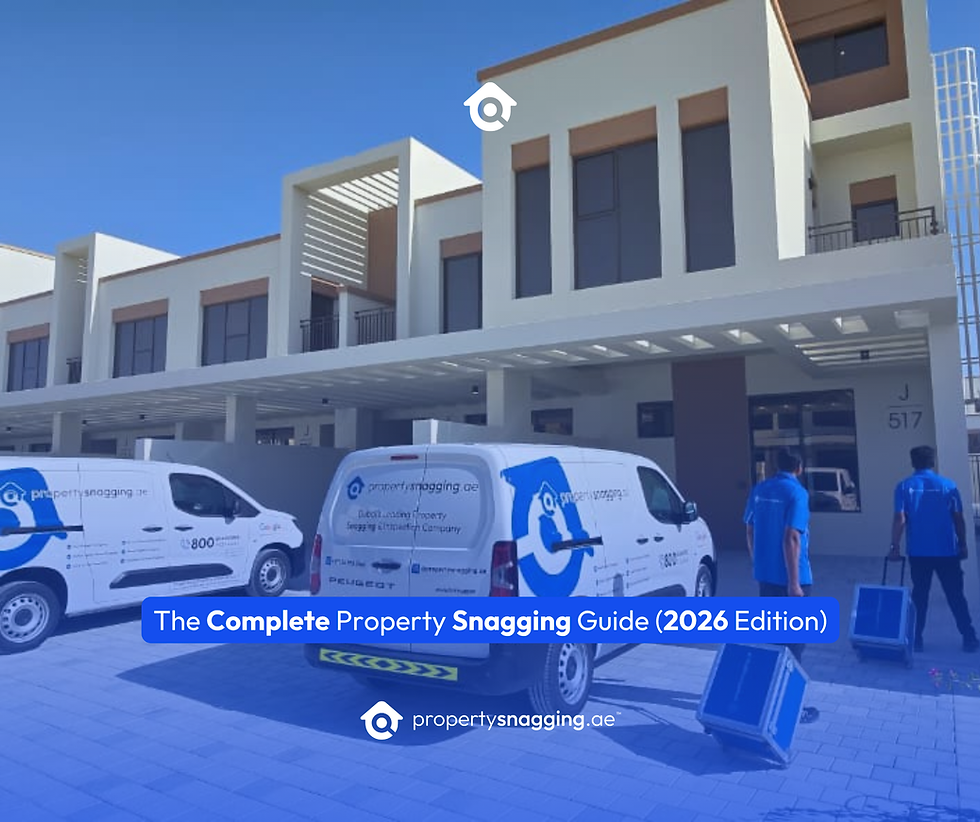
Property Snagging During the Defect Liability Period (DLP) Guide
Buying a new property in Dubai is a significant investment, but receiving the keys doesn't always mean every aspect of the property has been completed to the expected standard. Many issues only become visible after weeks or months of occupancy, once the air conditioning has been used continuously, plumbing systems have been tested under normal living conditions, and everyday use begins to reveal hidden defects.

This is exactly why Property Snagging remains essential even after handover. The Defect Liability Period (DLP) provides property owners with an opportunity to identify construction defects while the developer is still responsible for rectifying them.
Many homeowners mistakenly believe snagging should only be completed before collecting the keys. Experienced property inspectors know that some of the most expensive defects don't become apparent until after the property has been occupied. A carefully planned inspection during the DLP can uncover problems that could otherwise become the owner's financial responsibility once the warranty expires.
For apartment owners, villa buyers, investors, and landlords alike, understanding how Property Snagging fits into the Defect Liability Period can save thousands of dirhams in future repair costs while protecting the long-term value of the property.
Key Takeaways
✅ Property Snagging remains valuable throughout the Defect Liability Period.
✅ Many hidden defects only appear after several months of occupancy.
✅ Developers are generally responsible for construction-related defects during the DLP.
✅ A professional inspection provides documented evidence to support repair requests.
✅ Early inspections leave sufficient time for developers to complete repairs before warranties expire.
✅ Professional snagging reports help owners prioritize defects based on severity and urgency.
Understanding the Defect Liability Period (DLP)
The Defect Liability Period (DLP) is a contractual period following the handover of a newly completed property during which the developer remains responsible for correcting construction defects that result from workmanship, installation, or material quality.
Although the exact duration varies depending on the developer and the sales agreement, many residential developments in Dubai include a DLP of approximately 12 months for general construction items. Certain building systems or structural components may be covered under longer statutory warranties as defined by applicable regulations.
The DLP is designed to protect buyers against defects that were not immediately visible during handover.
Typical examples include:
Water leakage
Ceiling cracks
Tile movement
Door alignment issues
Window sealing problems
Plumbing leaks
Electrical faults
Poor silicone application
Paint failures
HVAC performance issues
Some of these defects may take several months before they become noticeable.
For example:
A bathroom waterproofing issue may not show signs until repeated shower use allows moisture to penetrate behind tiles.
Similarly, poor AC balancing may only become obvious during Dubai's summer months when cooling systems operate continuously.
Why Property Snagging During the DLP Is Different
Most buyers associate snagging with handover inspections.
While pre-handover inspections are extremely important, inspections carried out during the Defect Liability Period focus on a completely different objective.
Instead of identifying unfinished construction work, DLP inspections evaluate how the property performs after real-world usage.
Professional inspectors often discover issues that were impossible to identify on handover day.
Examples include:
Hidden Plumbing Problems
Small leaks behind cabinets
Slow drainage
Water pressure fluctuations
Pipe vibration
Water hammer
Incorrect pipe insulation
These issues frequently develop after the plumbing system has been used for several weeks.
HVAC Performance Issues
Dubai properties rely heavily on air conditioning.
Many cooling-related defects only become obvious during peak summer.
Professional inspections assess:
Cooling consistency
Airflow balance
Temperature differences
Condensation
Drainage performance
Thermostat accuracy
Poor HVAC performance not only reduces comfort but also increases electricity costs.
Settlement Cracks
Small structural movements naturally occur as buildings settle.
While hairline shrinkage cracks are generally expected, larger or expanding cracks should always be investigated.
Inspectors evaluate:
Crack width
Location
Direction
Pattern
Possible causes
Proper documentation helps determine whether repairs fall within developer responsibility.
Why Timing Matters
One of the biggest mistakes property owners make is waiting until the final weeks of the DLP before arranging an inspection.
By then:
Repair requests may take weeks to process.
Contractors may require multiple visits.
Some defects become more extensive.
Warranty deadlines may expire.
Experienced inspectors often recommend scheduling a comprehensive Property Snagging inspection several months before the DLP ends.
This provides sufficient time to:
✔️ Identify hidden issues.
✔️ Submit a professional snagging report.
✔️ Allow developer inspections.
✔️ Complete repair works.
✔️ Arrange re-inspections where necessary.
The earlier defects are documented, the easier they are to resolve while the developer remains responsible.
What Professional Property Snagging Inspectors Look For
A professional inspection extends well beyond checking whether walls have been painted correctly.
Qualified inspectors evaluate hundreds of individual inspection points covering both visible finishes and functional building systems.
Typical inspection categories include:
🏠 Interior Finishes
Paint quality
Ceiling alignment
Tile installation
Marble finishing
Floor levelness
Door operation
Cabinet installation
Silicone finishing
Glass condition
Wall defects
Even premium developments can contain workmanship issues that are easy to overlook without specialist knowledge.
⚡ Electrical Systems
Electrical inspections commonly include:
Socket testing
Switch functionality
Distribution board checks
Earth leakage protection
Lighting fixtures
Internet points
TV outlets
Smoke detector operation
Minor electrical issues discovered during the DLP can often be corrected quickly before they develop into larger maintenance problems.
🚿 Plumbing Systems
Water-related defects remain among the most frequently reported issues in newly completed properties.
Inspectors examine:
Pipe connections
Water pressure
Drainage
Basin installation
WC functionality
Shower operation
Water heater performance
Kitchen plumbing
Leakage detection
Many plumbing defects remain hidden until appliances and fixtures are used regularly.
🌡️ Air Conditioning Systems
In Dubai, HVAC systems deserve particular attention.
Professional inspectors evaluate:
Airflow
Supply air temperature
Cooling performance
Drain pans
Condensation
Ductwork
Vent balancing
Thermostat calibration
Poorly functioning AC systems are among the most common complaints raised during the DLP.
Industry Findings: What Inspection Data Reveals
After reviewing thousands of newly completed homes across Dubai, one consistent trend emerges: no property is entirely free from defects, regardless of the developer, location, or price point.
Luxury villas, branded residences, waterfront apartments, and affordable housing can all present issues that are only discovered through systematic inspection. In many cases, the defects are not structural failures but workmanship inconsistencies, installation errors, or commissioning problems that are straightforward for the developer to rectify provided they are identified within the Defect Liability Period.
This aligns with the findings discussed in our analysis of The Hidden Cost of Property Defects in Dubai 2026, which explains how seemingly minor issues can become expensive repairs if left unresolved. It also complements our review of What We Found in 1,000+ Property Inspections Across Dubai, where recurring defect patterns were identified across different communities and property types.
Likewise, our Dubai Property Defect Index 2026 highlights how construction quality can vary between developments, reinforcing why every property should be inspected on its own merits rather than relying on the developer's reputation alone.
For more expert insights, property owners can also explore the complete knowledge hub on the PropertySnagging.ae Blog, where we regularly publish practical guidance based on real inspection experience.
Common Defects Found During the Defect Liability Period
While every property is unique, certain issues appear repeatedly during inspections carried out within the Defect Liability Period. Many of these defects are not obvious during handover because they only become apparent after regular use.
Water Ingress and Moisture Issues
Water-related defects should never be ignored. Even a small leak can cause significant damage if left unresolved.
Common findings include:
Leaking pipe joints
Water seepage around shower trays
Poor waterproofing
Damp walls
Balcony drainage problems
Water penetration around windows
Moisture can also lead to mould growth, unpleasant odours, and deterioration of finishes.
Doors and Windows
Doors and windows are constantly used after moving in, making alignment issues easier to detect.
Inspectors commonly identify:
Doors rubbing against the floor
Loose handles
Poor locking mechanisms
Damaged seals
Air leakage
Water leakage during rainfall
Misaligned sliding doors
Proper sealing is particularly important in Dubai to reduce dust infiltration and improve energy efficiency.
Finishing and Cosmetic Defects
Although cosmetic defects may appear minor, they often indicate poor workmanship.
Examples include:
Uneven paint finishes
Hollow floor tiles
Chipped marble
Scratched glass
Poor silicone application
Loose skirting
Uneven grout lines
Cabinet alignment issues
Professional inspectors document every defect with photographs, precise locations, and recommended corrective actions.
The Cost of Delaying Property Snagging
Many homeowners assume they will notice all defects naturally while living in the property. Unfortunately, this approach can become expensive.
A minor plumbing leak hidden beneath a vanity unit may remain unnoticed until cabinetry begins to swell.
An incorrectly installed AC drain could gradually damage ceilings before visible stains appear.
Loose balcony tiles may allow water to penetrate the substrate, eventually requiring extensive repairs.
Once the Defect Liability Period expires, the responsibility for many non-structural repairs may shift to the property owner.
Scheduling a professional Property Snagging inspection before the DLP ends is often one of the most cost-effective decisions a homeowner can make.
Developer Responsibilities vs. Homeowner Responsibilities
One area that often causes confusion is determining which defects the developer should rectify and which become the owner's responsibility.
While every sale agreement should be reviewed individually, developers are generally responsible for construction defects related to workmanship, installation, or materials during the DLP.
These may include:
Faulty door installation
Plumbing leaks caused by installation defects
Defective tile installation
Window sealing issues
Paint failures due to poor workmanship
HVAC commissioning problems
Electrical installation defects
Property owners, on the other hand, are typically responsible for:
Damage caused after moving in
Poor maintenance
Wear and tear
Alterations carried out after handover
Damage resulting from misuse
A professional snagging report helps distinguish genuine construction defects from maintenance-related issues, making communication with the developer more straightforward.
Expert Observations That Many Buyers Overlook
After inspecting thousands of properties across Dubai, several patterns emerge that many buyers do not anticipate.
🏡 Premium Properties Are Not Immune
A higher purchase price does not guarantee flawless construction. Luxury apartments and villas often feature more complex systems, bespoke finishes, and premium materials, increasing the number of components that require careful inspection.
📅 Defects Can Evolve Over Time
Some issues begin as minor imperfections but become more serious after months of normal use.
Examples include:
Expanding ceiling cracks
Progressive water seepage
Silicone failure around wet areas
Air conditioning drainage problems
Tile movement caused by inadequate adhesive coverage
Routine occupancy reveals defects that simply cannot be identified during a brief handover visit.
📷 Documentation Makes a Difference
One of the most valuable aspects of professional Property Snagging is detailed documentation.
A comprehensive report typically includes:
High-resolution photographs
Exact defect locations
Clear descriptions
Severity ratings
Recommended corrective actions
This creates an objective record that helps developers understand and address the issues efficiently.
Best Time to Schedule Property Snagging During the DLP
Although every property is different, many inspection professionals recommend arranging a comprehensive DLP inspection approximately two to three months before the Defect Liability Period expires.
This allows sufficient time to:
Conduct a detailed inspection
Submit the snagging report
Allow the developer to review the findings
Complete repair work
Arrange a follow-up inspection if necessary
Leaving the inspection until the final days of the DLP can reduce the time available for corrective work and increase the risk of unresolved defects.
Why Professional Property Snagging Adds Value
A professional inspection provides much more than a checklist.
It delivers:
✅ Independent technical assessment
✅ Experienced defect identification
✅ Specialist inspection equipment
✅ Comprehensive reporting
✅ Clear evidence for warranty claims
✅ Peace of mind for homeowners and investors
Whether the property is owner-occupied or intended as an investment, identifying defects before the DLP expires helps protect both its condition and long-term value.
Frequently Asked Questions (FAQ)
1. What is Property Snagging during the Defect Liability Period?
Property Snagging during the DLP is a professional inspection carried out after handover to identify construction defects while the developer is still responsible for rectifying eligible issues under the warranty period.
2. When should I arrange a DLP snagging inspection?
The ideal time is generally two to three months before the Defect Liability Period ends. This provides enough time for inspections, repair requests, and follow-up work before warranty deadlines.
3. Is Property Snagging still necessary if I had a pre-handover inspection?
Yes. Some defects only become visible after the property has been occupied and its systems have been used under normal living conditions. A DLP inspection complements the pre-handover inspection by assessing real-world performance.
4. What types of defects are commonly found during the DLP?
Common issues include plumbing leaks, air conditioning faults, cracked sealants, settlement cracks, door and window alignment problems, poor paint finishes, tile movement, and electrical installation defects.
5. Can a professional snagging report help with developer repairs?
Yes. A detailed report provides clear documentation, photographs, and technical descriptions that make it easier for developers to understand and address construction-related defects within the warranty period.
6. Does every new property need Property Snagging?
Yes. Every property is built by people, and even high-end developments can have workmanship or installation issues. An independent inspection ensures defects are identified before they become the owner's responsibility.
Protect Your Investment Before the DLP Expires
The Defect Liability Period offers property owners an important opportunity to ensure their home is performing as intended. Once this period ends, many repair costs that could have been addressed by the developer may become the owner's responsibility.
Professional Property Snagging provides a structured, independent assessment of your property's condition, helping you identify hidden defects, support repair requests with detailed evidence, and preserve the long-term value of your investment.
If your property's DLP is approaching its expiry date, don't wait until the final weeks. A timely inspection gives you the best opportunity to resolve outstanding issues while warranty obligations are still in place.
For guidance on construction quality trends and inspection insights, explore our articles on:
The Dubai Property Defect Index 2026: Ranking Construction Quality Across Major Developments
The Hidden Cost of Property Defects in Dubai: 2026 Inspection Data Reveals the Truth
What We Found in 1,000+ Property Inspections Across Dubai
Visit our PropertySnagging.ae Blog for more expert advice and inspection resources.
For additional information on property ownership and construction standards, refer to the Dubai Land Department (DLD), RERA, Dubai Municipality, InterNACHI, and relevant International Building Code (IBC) guidance.
Book Your Professional Property Snagging Inspection Today
Your property deserves more than a quick visual check. Our experienced engineers carry out detailed inspections using professional testing methods to identify defects that could otherwise go unnoticed until they become costly problems.
Whether you've recently moved in or your Defect Liability Period is nearing its end, PropertySnagging.ae is here to help you protect your investment with comprehensive inspections and clear, actionable reports.
Contact our team today to schedule your inspection and gain confidence that your property meets the standard you expect.
📞 +971 56 790 7966
⭐ 1014+ Verified 5-Star Reviews